
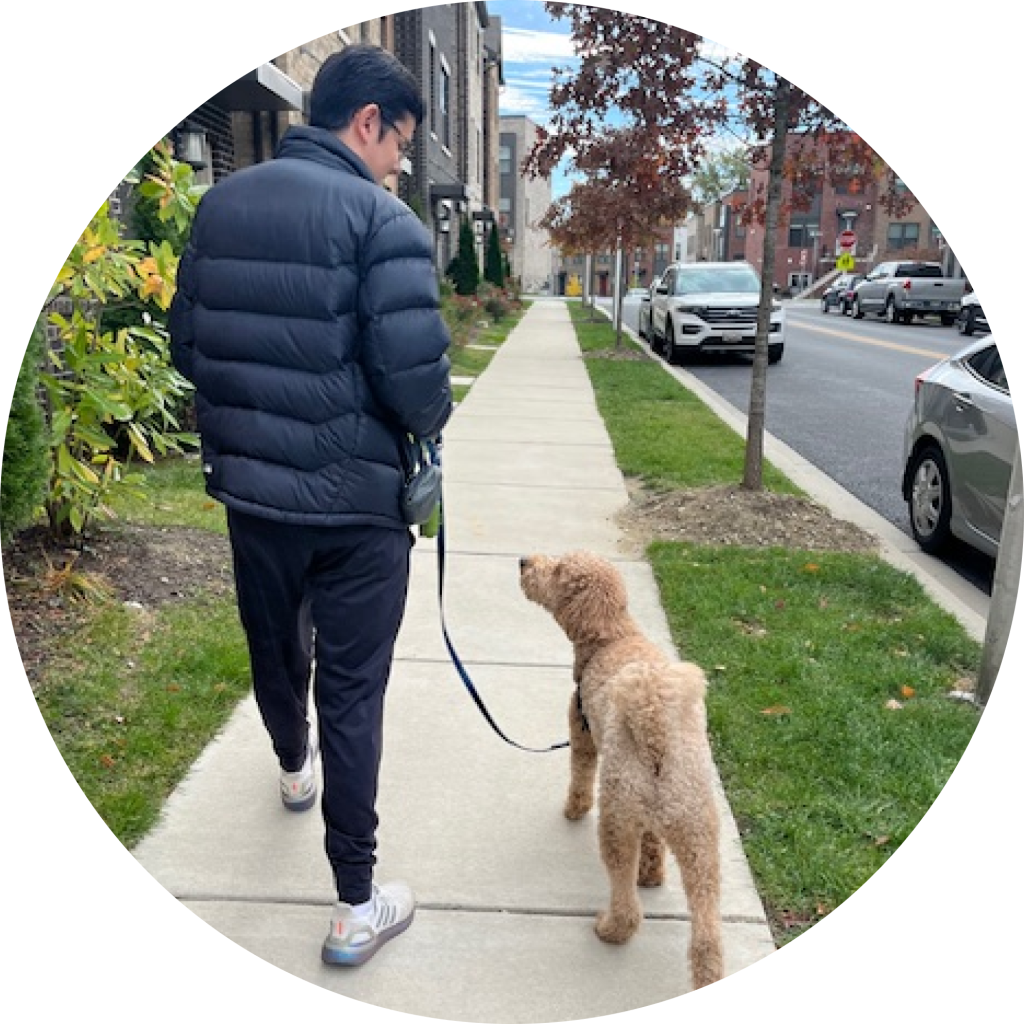
Training your dog to walk nicely on leash doesn’t have to be a chore.
Make sure their physical exercise needs are met before the walk even starts.
- Walks should not be the only form of exercise your dog receives, especially if they are young and healthy. Our pace is so slow compared to theirs!
- I like to exercise a dog prior to their walk to burn off some energy and reduce frustration. This can be achieved through fetch in the house, tug, or play with the flirt pole inside before you leash them to go out.
- Consider taking them to quiet parks or SniffSpot locations several times a week to let them sniff and explore with no expectation of obedience. I do reward check-ins, but rarely ask for them during these outings, as I want it to be all about them and their choice.

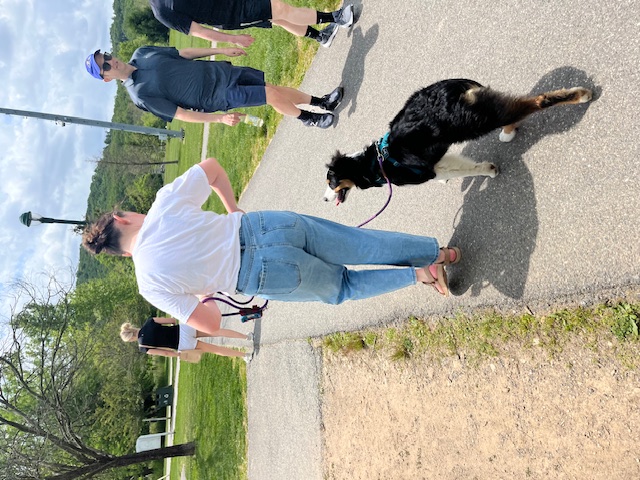
Practice in an environment where they can easily make eye contact and take treats.
- Using a longer leash (10-20ft) can allow for more freedom of movement, reducing frustration that can sometimes happen on a 4 or 5ft leash.
- Heavily reward eye contact on leash while standing still using high value treats like chicken or lean roast beef. Then, begin moving backwards and forwards, rewarding as they stay with you and give eye contact.
- Play the engage/disengage game every time you see something that typically causes your dog to pull or lunge.
- Practice frequently in low distraction environments, like your living room or hallway, then begin practicing in your back or front yard during quiet times.
Once they are consistently making eye contact and staying within the length of the leash, you can begin practicing in higher distraction areas.
- The more difficult the environment, the higher the rate of reinforcement needs to be.
- High value treats should be used when working outside. For example, if kibble works in the house, I often switch to cheese or meat when working outside, and reward more frequently.
- Surges ahead or attempts to muscle their way forward, where the leash goes tight, means the handler should stop moving or move backwards. This can be punishing to the dog – pulling means she gets further from the thing she wants. It can seem like a chore at first, but it’s pretty effective. Example on how to work on that here. If doing this solo, toss a handful of treats out in front of you, way beyond the length of the leash, and practice using the same guidelines in the linked video.
Reinforce what you want to see more of, and set up the environment so your dog can succeed.
- Stop reinforcing behaviors that you don’t like. If you don’t want your dog pulling you everywhere, stop following them when they pull you! Don’t take them to a crowded park if they struggle with focusing on you. Practice at home first, and work up to that. It really is that simple.
Helpful Equipment
- Harnesses that help prevent pulling:
PetSafe 3 in 1 or the Freedom Harness. Make sure to use the front loop, not the one between the shoulder blades. Harness should fit very snug to their body. - Head halters that help prevent pulling:
Halti is my favorite brand. I recommend head halters whenever there is a size or strength discrepancy between dog and handler. Make sure to take time to acclimate them to it, otherwise they will hate it. This is a great tutorial showing how to get a dog comfortable wearing one.